Friday, March 8, 2013

Plastic as a POLYMER


What is organic compound?
Life is based on carbon ability to form diverse structures and an endless number of different carbon based molecules. The study of carbon containing compound has come to be known as Organic Chemistry. The food we intake, the fragrance we inhale, the colors we see are predominantly due to organic compounds. Organic chemistry deals not only with the chemistry of life and the natural carbon compounds but also with the huge, increasing number of synthetic carbon compound. There is hardly any walk of life where we do not need the organic compounds. Plastic is one of the instance of organic compound.
Forty years ago, anything made of plastic was considered "cheap." That’s certainly not true today when plastics are used in thousands of products ranging from computers, automobile parts and important medical equipment to toys, cookware, sports equipment, and even clothes. And the plastics industry continues to grow rapidly.

                  
Introduction of plastic
The first important plastic, celluloid which is a mixture of cellulose nitrate, camphor, and alcohol and is thermoplastic. However, plastics did not come into modern industrial use until after the production of Bakelite . Bakelite, is made by the polymerization of phenol and formaldehyde through  thermosetting.
.
How polymerization occur?
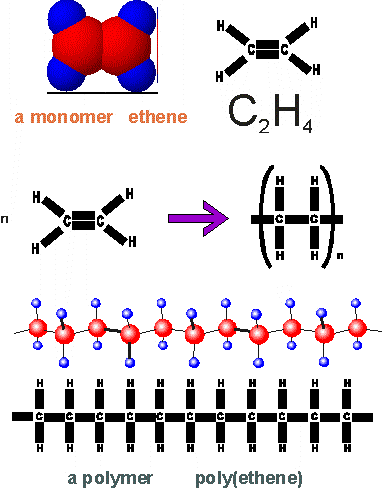
Plastics are synthetic materials, which means that they are artificial, or manufactured. The building blocks for making plastics are small organic molecules - molecules that contain carbon along with other substances. They generally come from oil (petroleum) or natural gas, but they can also come from other organic materials such as wood fibers, corn, or banana peels. Each of these small molecules is known as a monomer ("one part") because it's capable of joining with other monomers to form very long molecule chains called polymers("many parts") during a chemical reaction called polymerization. Polymerization is often started by combining the monomers through the use of a catalyst - a substance that aids a chemical reaction without undergoing any permanent chemical change itself. 

1.    Crude oil, the unprocessed oil that comes out of the ground, contains hundreds of different hydrocarbons, as well as small amounts of other materials. The job of an oil refinery is to separate these materials and also to break down hydrocarbon into smaller one.
2.    A petrochemical plant receives refined oil containing the small monomers they need and creates polymers through chemical reactions.
3.    A plastics factory buys the end products of a petrochemical plant - polymers in the form of resins - introduces additives to modify or obtain desirable properties, then molds or otherwise forms the final plastic products.

An example of polymerization,
production of nylon-6,6


Structure of polymer

Many common classes of polymers are composed of hydrocarbons. These polymers are specifically made of small units bonded into long chains. Carbon makes up the backbone of the molecule and hydrogen atoms are bonded along the backbone. Below is a diagram of polyethylene, the simplest polymer structure.
There are polymers that contain only carbon and hydrogen (for example, polypropylene, polybutylene, polystyrene, and polymethylpentene). Even though the basic makeup of many polymers is carbon and hydrogen, other elements can also be involved. Oxygen, chlorine, fluorine, nitrogen, silicon, phosphorous, and sulfur are other elements that are found in the molecular makeup of polymers. Polyvinyl chloride (PVC) contains chlorine. Nylon contains nitrogen and oxygen. Teflon contains fluorine. Polyesters and polycarbonates contain oxygen. Vulcanized rubber and thiokol contain sulfur. There are also some polymers that, instead of having carbon backbones, have silicon or phosphorous backbones. These are considered inorganic polymers. One of the most famous silicon-based polymers is Silly PuttyTM

Enviromental issue

Plastic waste in Pacific Ocean

Marine life will be threaten if wastage of plastic did not solve in the future.


Plastics are durable and degrade very slowly; the chemical bonds that make plastic so durable make it equally resistant to natural processes of degradation. Since the 1950s, one billion tons of plastic have been discarded and may persist for hundreds or even thousands of years. Perhaps the biggest environmental threat from plastic comes from nurdles, which are the raw material from which all plastics are made. They are tiny pre-plastic pellets that kill large numbers of fish and birds that mistake them for food. Prior to the ban on the use of CFCs in extrusion of polystyrene the production of polystyrene contributed to the depletion of the ozone layer; however, non-CFCs are currently used in the extrusion process. Nowdays, there are quite often the nation concern about this environmental issue. Most of the country are go towards protecting the environment by using biodegrable bag instead of the plastic. This is why many slogan were being launch such as ‘Go Green’
Alertness of public to use recycle bag rather than plastic bag.
1.5 tonne of plastic bottles are produced annually, it is the time to Go Green!
A 6 year-old child also knew what are '3R' stands for, do you know that?
Is it impossible for human live without plastic products? As we insist on to be changed, we can do it!
Does it shocked you?

New era of '4R' , refill the plastic bottles rather pay for another plastic bottles.


Thursday, March 7, 2013


Ascorbic Acid ( Vitamin C )


What is Ascorbic Acid ? 

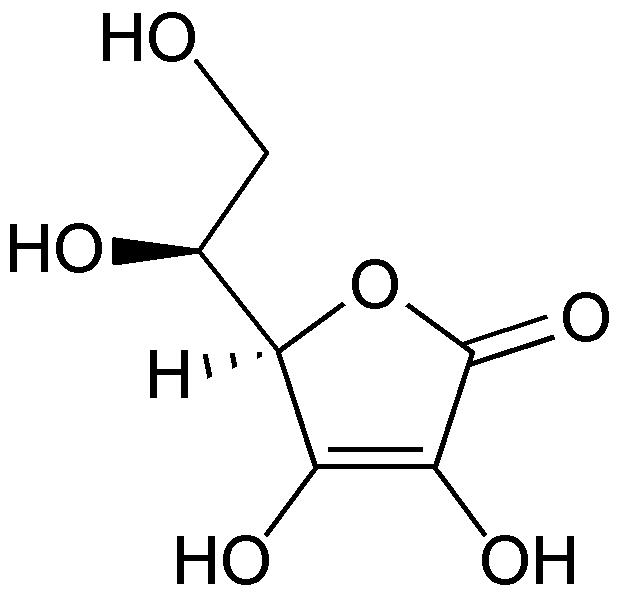
Structure of Ascorbic Acid 
Ascorbic acid is a naturally occurring organic compound with antioxidant properties. It is a white solid, but impure samples can appear yellowish. It dissolves well in water to give mildly acidic solutions. Ascorbic acid is one form of vitamin C. It was originally called L-hexuronic acid, but when it was found to have vitamin C activity in animals, the suggestion was made to rename L-hexuronic acid. The new name for L-hexuronic acid is derived from a- which mean "no"  and scorbutus which mean scurvy. Scurvy is once common in among sailors, causes bleeding and inflamed gums, loose teeth, poor wound healing, pain in the joints, and muscle wasting.

Vitamins are organic molecules that mainly function as catalysts for reactions in the body. A catalyst is a substance that allows a chemical reaction to occur using less energy and less time than it would take under normal conditions. Vitamin C is also important as it helps protect the fat-soluble vitamins A and E, as well as fatty acids from oxidation 


Role of Vitamin C in Human 

Vitamin C is water-soluble and very important to all humans because it is vital to the production of collagen. Inside the cell, it helps form a precursor molecule called "procollagen" that is later packaged and modified into collagen outside the cell. Collagen is a glue like substance that binds cells together to form tissues. It is the most abundant of the fibers contained in connective tissues. Connective tissue gives the human body form and supports its organs.


Vitamin C for Collagen Production

Current evidence suggests that the major benefit of ascorbic acid with regard to cancer may be in reducing the risk of developing cancer, rather than in therapy. Vitamin C can work inside the cells to protect DNA (deoxyribonucleic acid), the hereditary material in cells, from the damage caused by free radicals. Also, it can reduce the development of nitrosamines from nitrates, chemicals that are commonly used in processed foods. Once formed, nitrosamine can become carcinogenic which is cancer-causing.

Vitamin C for DNA Protection
As A Whitening Agent
Ascorbic acid, Magnesium ascorbyl phosphate, etc.) are considered an effective antioxidant for the skin and help to

 lighten skin. One study found it raises glutathione levels in 

the body. Another study found that brownish guinea pigs 

given vitamin C, vitamin E and L-cysteine, simultaneously, 

lead to lighter skin. Skin care researches have shown evidence that Vitamin C can help in treating skin problems like sun spots, dark spots, burns, age spots, blemishes, wrinkles and even other hyper pigmentation annoying problems. Vitamin C help reduces melanin formation in the skin. Melanin is a skin pigment which is responsible for giving the skin a dark shade as an protection for our skin from being directly damage by UV rays. It causes skin lightening by interacting with copper ions at the tyrosinase active site and by reducing oxidized dopaquinone, a substrate in the melanin synthetic pathway and interrupting DHICA oxidation It also acts as an ROS scavenger by donating electrons to neutralize free radicals found in the aqueous compartment of the cell.
Vitamin C shows the effectiveness of whitening function.

Boost the Immune System
Vitamin C is an extremely important nutrient for boosting immunity. Vitamin C takes the offensive line against germs. Vitamin C boosts the immune system by boosting the cells that are responsible for killing germs in the body. Vitamin C makes interferon, a protein that helps destroy viruses in the body. Vitamin C also increases the level of glutathione, which boosts the immune system. Vitamin C is especially required for the functioning of the

 phagocytes and T-lymphocytes. The effects of vitamin C has been

 particularly been emphasized against infections such as the

 common cold and flu. Vitamin C when administered with other 

medications for flu and common cold significantly reduced the 

duration of these infections. Vitamin C supplementation is therefore

 advised along with regular medications in order to reduce the 

severity and duration of infectious disorders.

Cofactor of the Enzymes

While  collagen were important in our human, the enzymes which synthesis collage need vitamin C as a cofactor to them. Prolyl-3-hydroxylaseprolyl-4-hydroxylase, and lysyl hydroxylase are the three enzymes that responsible for the production of 

collagen, which is in triple helix structure. They needed vitamin C 

to act as an electrons donor. Thus vitamin C is essential to the 

development and maintenance of scar tissueblood vessels, and 

cartilage.


What are the sources of Vitamin C ? 

Vitamin C is derived from glucose. Therefore, many animals are able to produce it, but humans require it as part of their nutrition. Other vertebrates lacking the ability to produce ascorbic acid include other primates, guinea pigs, teleost fishes, bats, and birds, all of which require it as a dietary micronutrient.Sources of vitamin C are numerous. It can be found in citrus fruits such as oranges, limes, and grapefruits and vegetables including tomatoes, green peppers, potatoes, and others. 
vitamin C deficiency

Vitamin C in various fruits and vegetables.
How much of Vitamin C should we consume? 

The recommended dietary allowance of vitamin C is 60 milligrams which is 0.0021 ounces per day. An average American ingests about 72 milligrams equivalent to 0.0025 ounces per day.Some studies suggest higher daily doses especially for the elderly, women, and the infirm. For example, the late Linus Pauling, best known for his theory on chemical bonding and a two-time Nobel Prize winner, consumed several grams of vitamin C per day for the last forty years of his life and lived to age ninety-three.

How Much Vitamin C Should I Take


Too much vitamin C: Harmful?

Although vitamin C is an essential element for human, however, too much of vitamin C intake will also lead to several diseases. Such as kidney stones, heart burn and diarrhea. 

Deficiency On Vitamin C

Deficiency on vitamin c will lead to scurvy, anaemia, bleeding gums and loosen of teeth. In the nut shell, the intake of vitamin C should be in the average level, not too much and not too less.